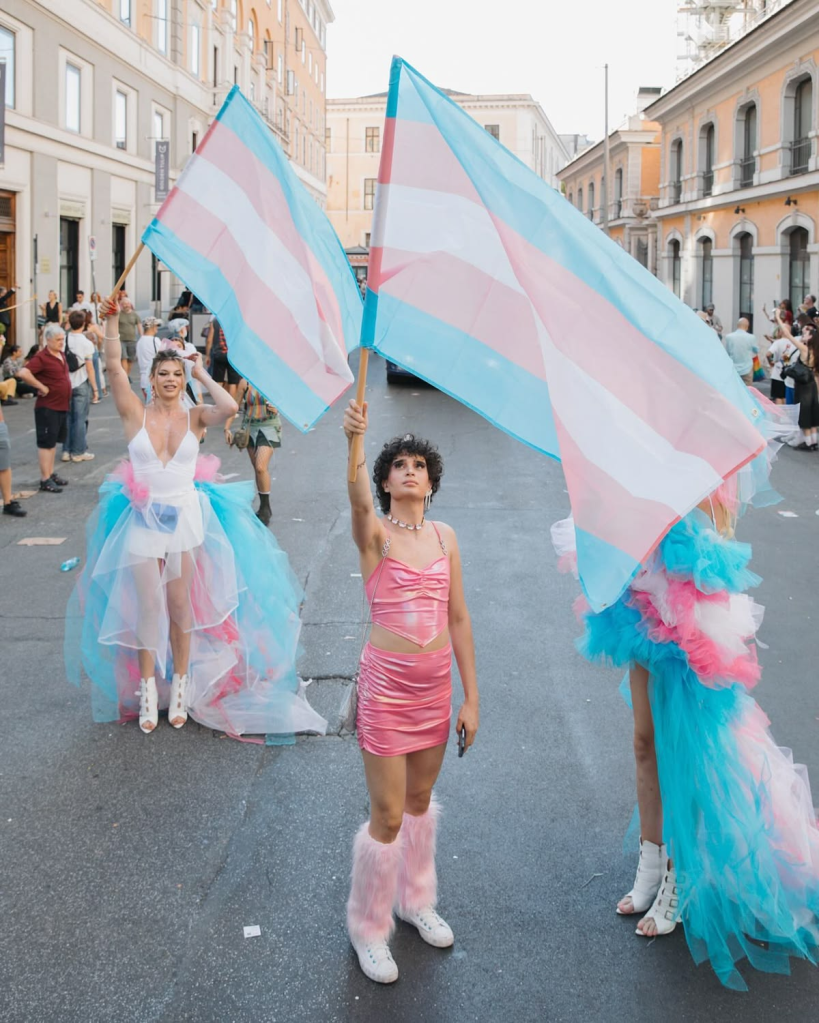
Pride Month is in full swing now, and while it’s absolutely exciting and worth celebrating, it’s important we remain informed of what it really means, why we need it, and what we’re fighting for. Hatred and discrimination against trans people across the world is at an all-time high, and many of us have already had to relocate for safety, healthcare, rights, and community. And even after relocation, we have to fight to be recognized as human and receive the support we need.
So what can allies do to help us?
First, stay informed.
This is an obvious one. But it means more than you think. It’s not just about the headlines. Follow trans creators on social media and view their content. Read books and watch shows/films, both real and fictional, about trans people and their lives, and about our history. Learn about trans joy as well as our struggles. Learn how transitioning works from people who have gone through it. Learn how puberty blockers and HRT really work and how to properly support both trans adults AND trans kids going through their transitions. Find out what legal protections trans people have in your state/country, which fundraisers/organizations you can support that actually help us, and how you can get involved in community efforts to help us. And make sure you know that gender and sexuality are not the same thing, that trans people can have the same wide variety of sexualities that cis people do. No matter what surgeries we’ve had or haven’t had, trans men can be gay, trans women can be lesbians, non-binary people can use any sexuality label that works for them (as can any trans person!), and you don’t always have to change your sexuality label just because you feel attracted to a trans person. If you’re a lesbian, for example, and you fall in love with a trans woman, guess what? You’re still a lesbian!
The more you know about trans people and our experiences, the easier it is to understand us as people. It’s easier for us too. All too often, when we disclose we’re trans, people ask us really invasive questions about our bodies, or how we realized we’re trans and came out, or why we “chose” to be trans. Or worse, they try to debate us on bathrooms, sports, healthcare, or whether children should be allowed to transition, starting with “I support trans people, but…”
When our friends and allies are informed about our identities and experience, it takes the burden of explaining ourselves off our shoulders, and makes us feel safer and more understood.
Second, keep being open-minded and using inclusive language.
Even if you don’t think you know a trans person, you’ve probably met one before. You never really know if someone’s trans until they tell you, so just stay open-minded and be kind. It’s better not to flaunt your “ally” title all over the place, as anyone can just say they’re an ally and then start spouting microaggressions. Being an ally is not an identity, it’s an action. Being open-minded, kind, non-judgemental, and truly supportive is what really makes you the kind of person a trans person would feel comfortable coming out to.
On top of that, using gender-inclusive language really helps. Even something as small as including your pronouns in email signatures and saying “they” rather than “he or she” when you don’t know someone’s gender, or “everyone/honored guests” rather than “ladies and gentlemen” when you’re addressing an audience makes a big difference. It helps all of us feel included without being singled out. Introducing yourself with your pronouns as well as your name and asking others their pronouns regardless of whether you think they’re trans or not takes this a step further in helping inclusive language, and our existence as trans people, be more normalized. Of course, if a binary trans person asks you to use more gendered language for them specifically, use it! Just make sure you communicate with them on what terms they’re comfortable with.
Third, show up.
Make it known that you’re with us. Accompany us to protests, speak up for us, and provide backup for us when we’re in trouble. We’re in danger every day now, so any effort you make to help us feel safer and aid us in our fight helps. Donate to our relocation/surgery/bill fundraisers if we have them, and send money to us directly if we don’t and if you can. Help us find suitable housing where we’re living/moving, jobs that support us and are willing to hire us, and hospitals/organizations that provide the care we need. We need material support and safe spaces where we can build community and protect each other. Community is how we survive this.
Finally, help us belong.
Get to know us as people, and treat us as such. Be our friends. Ask us how you can support us individually. Invite us to hang out with you and your other friends. Make plans with us in mind. Don’t treat us as your “token trans friends”, but as part of your inner circle. If you’re single and we identify as the gender(s) you’re attracted to, add us to your dating pool. And if you do date one of us, show us off. Love us both out loud and quietly, in public and in private. Don’t treat us like secrets or something to hide. And definitely don’t treat us like sex objects or fetishes. We’re human beings just like anyone else, and we’re worthy of being loved openly as we are.
For many of us, our struggles with being accepted and loved for who we are started in our families, with our old friends and partners, in our school/work environments, and where we live/used to live. You and your community have the power to stand in, protect us, help us heal, and become our chosen family. We need you. It’s time to step up.
 Allegra's Trans Experience
Leave a comment